Legendary Tech
Filter

The best selling computer of all time

The Commodore 64 sold so many units that nobody can agree on the number
15 Jul 2026 · 1 min read · Commodore 64
The best selling computer of all time

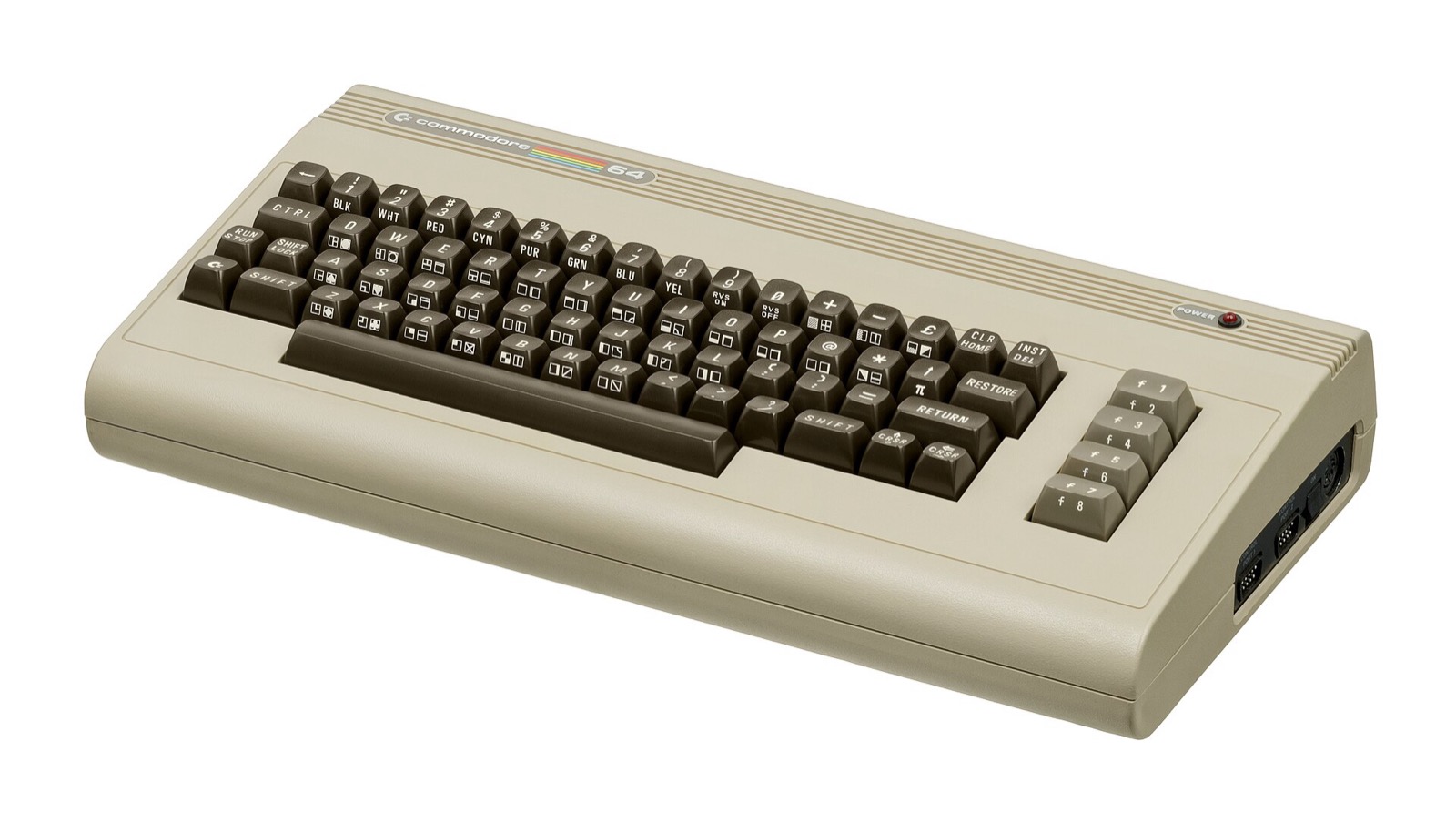
One computer has sold more units than any other single model, ever. It is not a Mac and it is not a ThinkPad. It is a chunky beige wedge from 1982 called the Commodore 64.

How many did it sell? Nobody actually knows. Estimates run from around 12 million to 17 million, and people have written research papers trying to pin it down. When your sales are so big they become an academic argument, you have won.

The trick was price. It launched at $595 when comparable machines cost twice that, and Commodore kept cutting until a real computer cost less than a bicycle. It sold in toy stores and supermarkets, next to the crayons. For millions of families, the C64 was the first computer in the house.

And because the machine in the house had a real keyboard and a built-in programming language, a generation of kids typed their first line of code on one. Ask an older programmer where they started. The answer is very often this machine.

Thousands are still running. The C64 scene releases new games and demos every year, on real hardware, four decades on.

One warning if you drag yours out of the garage: do not plug in the original power supply until you have read the guide in the library. It has a famous failure mode that kills the machine. The spec sheet, the guide, and the owners are all there. Add yours to your gear and join the biggest club in computing.
In the library

The console that arrived from the future

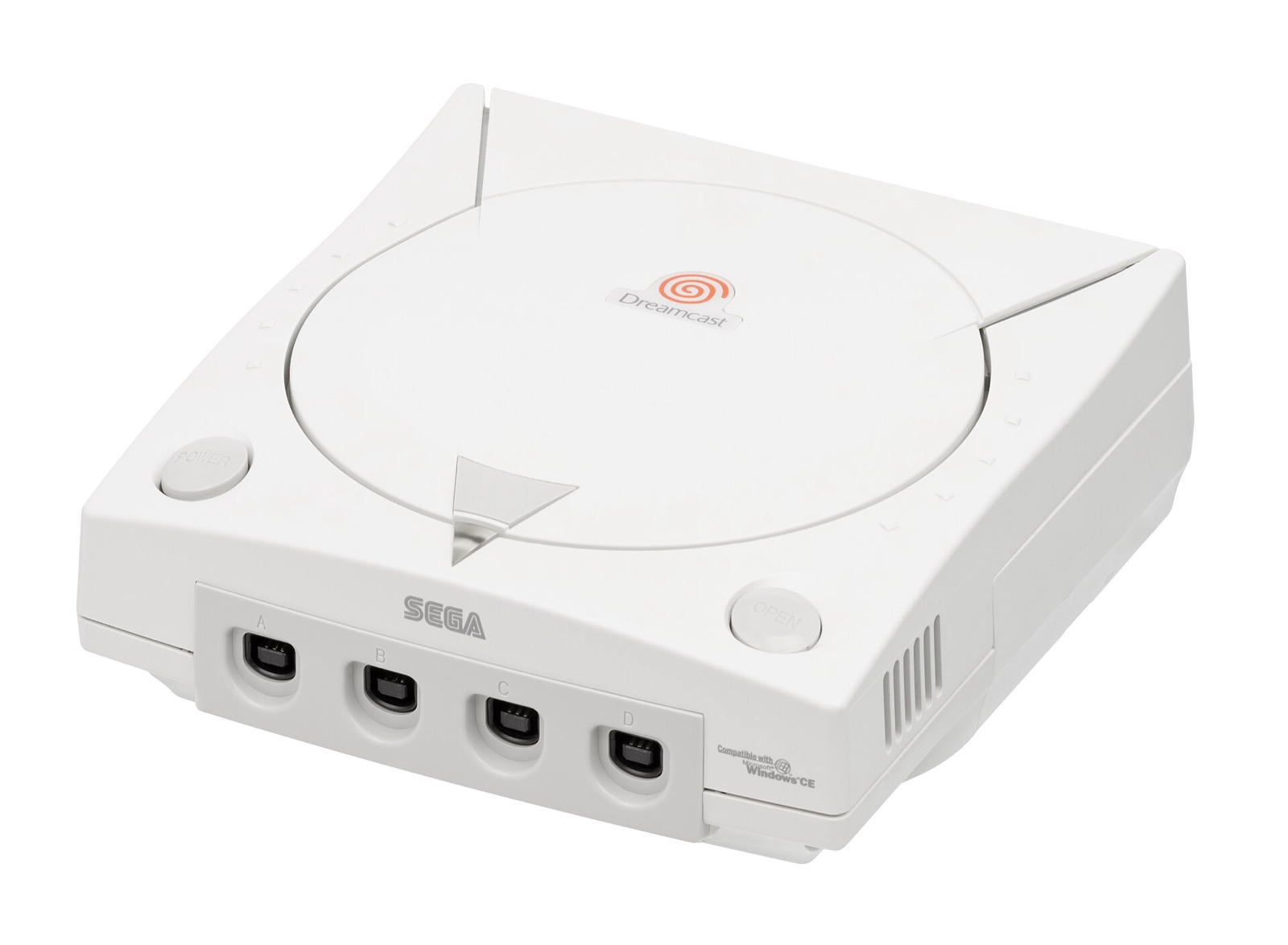
The Dreamcast shipped with a modem in 1999, played online, and was dead in two years

14 Jul 2026 · 1 min read · Sega Dreamcast
The console that arrived from the future

On September 9, 1999, Sega launched the Dreamcast in America, and it felt like a machine from five years ahead.

It had a modem in every box, and you could take it online: real matches against real people, from your couch, in 1999. It had a memory card with its own screen and buttons that played tiny games on the bus. And its arcade-perfect graphics embarrassed everything else you could plug into a TV.

The games hold up as some of the best a console ever got. Shenmue. Jet Set Radio. Crazy Taxi. SoulCalibur. Sonic Adventure.

None of it mattered. Sony had announced the PlayStation 2, and its DVD player and hype swallowed the whole market. People stopped buying Dreamcasts while they waited for the future Sony promised. Around nine million sold, and by early 2001 Sega gave up on the console entirely. It never made another one.

The Dreamcast lost so hard it became sacred. The fan scene never left: people still make new Dreamcast games today, and the online services fans rebuilt themselves.

Being right early looks exactly like being wrong. The library has the full spec sheet and the owner notes. Add yours to your gear, the dream is still spinning.

In the library

The laptop with the unfolding keyboard

The ThinkPad 701c's keyboard was wider than the laptop. IBM made it work with origami.

13 Jul 2026 · 1 min read · ThinkPad 701C
The laptop with the unfolding keyboard

In 1995 laptop makers had a problem. People wanted small laptops and full-size keyboards, and you cannot have both.

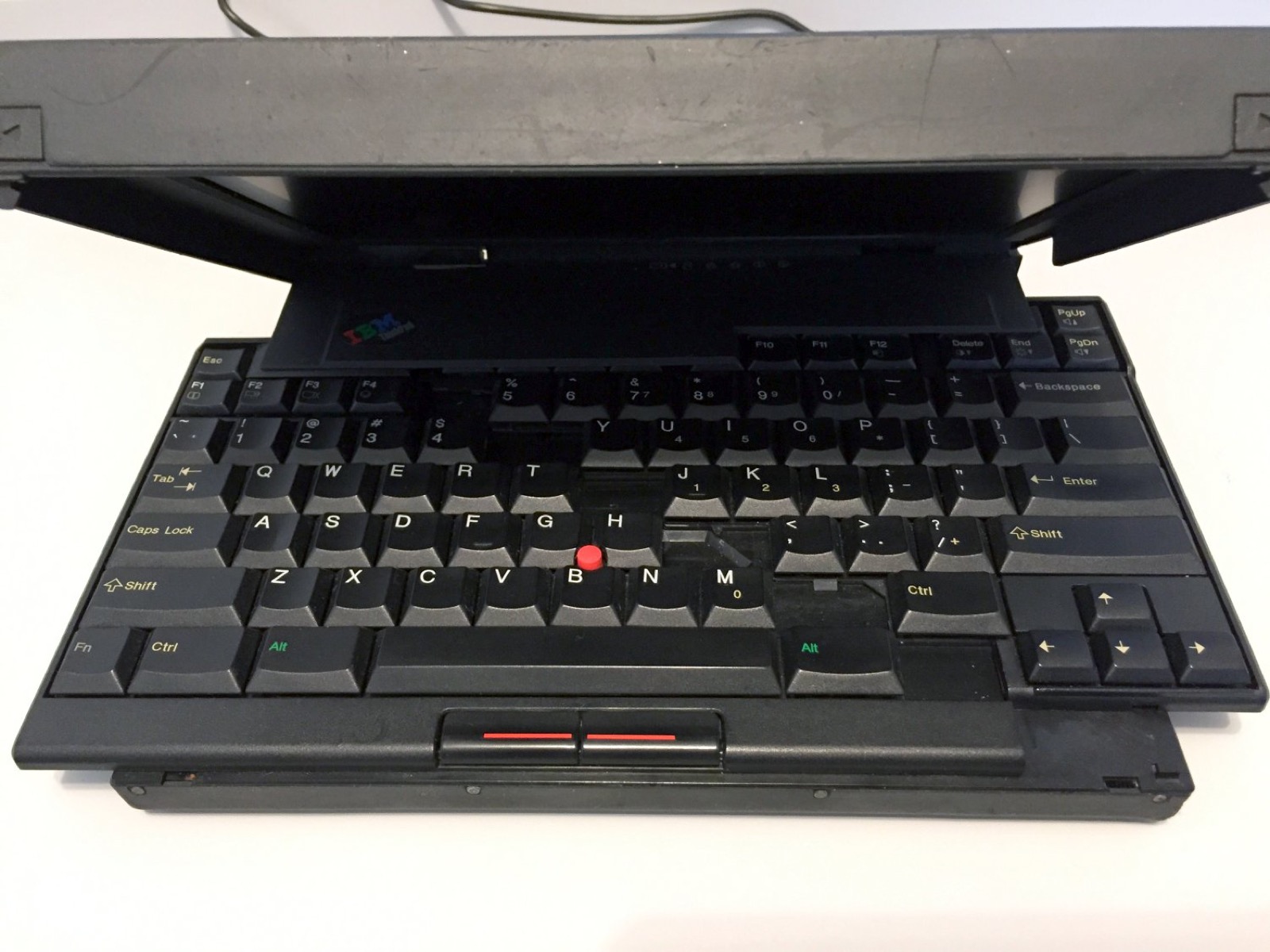
IBM's answer was the ThinkPad 701c, and it still makes people gasp. Close the lid and it is a tiny 10-inch machine. Open it and the keyboard unfolds: two halves slide apart and lock together into a keyboard wider than the laptop itself. The mechanism is called the butterfly, and watching it work feels like a magic trick.

It was not a gimmick. The keyboard was a real, full-size ThinkPad keyboard, which is to say one of the best ever put in a portable computer.

The butterfly lived for about a year. Not because it failed, but because screens got bigger. Once laptops were wide enough for a full keyboard anyway, the origami had nothing left to solve. IBM never used it again.

The design was celebrated enough to end up in the collection of the Museum of Modern Art in New York. Not many laptops can say that.

Collectors adore the 701c, and working ones keep climbing in price. The full spec sheet and owner notes are in the library. If a butterfly lives at your place, add it to your gear. We want to meet it.

In the library

A thousand songs in your pocket

The 2001 iPod was late, expensive, and Mac-only. It ate the entire music industry anyway.

12 Jul 2026 · 1 min read · iPod (1st generation)
A thousand songs in your pocket

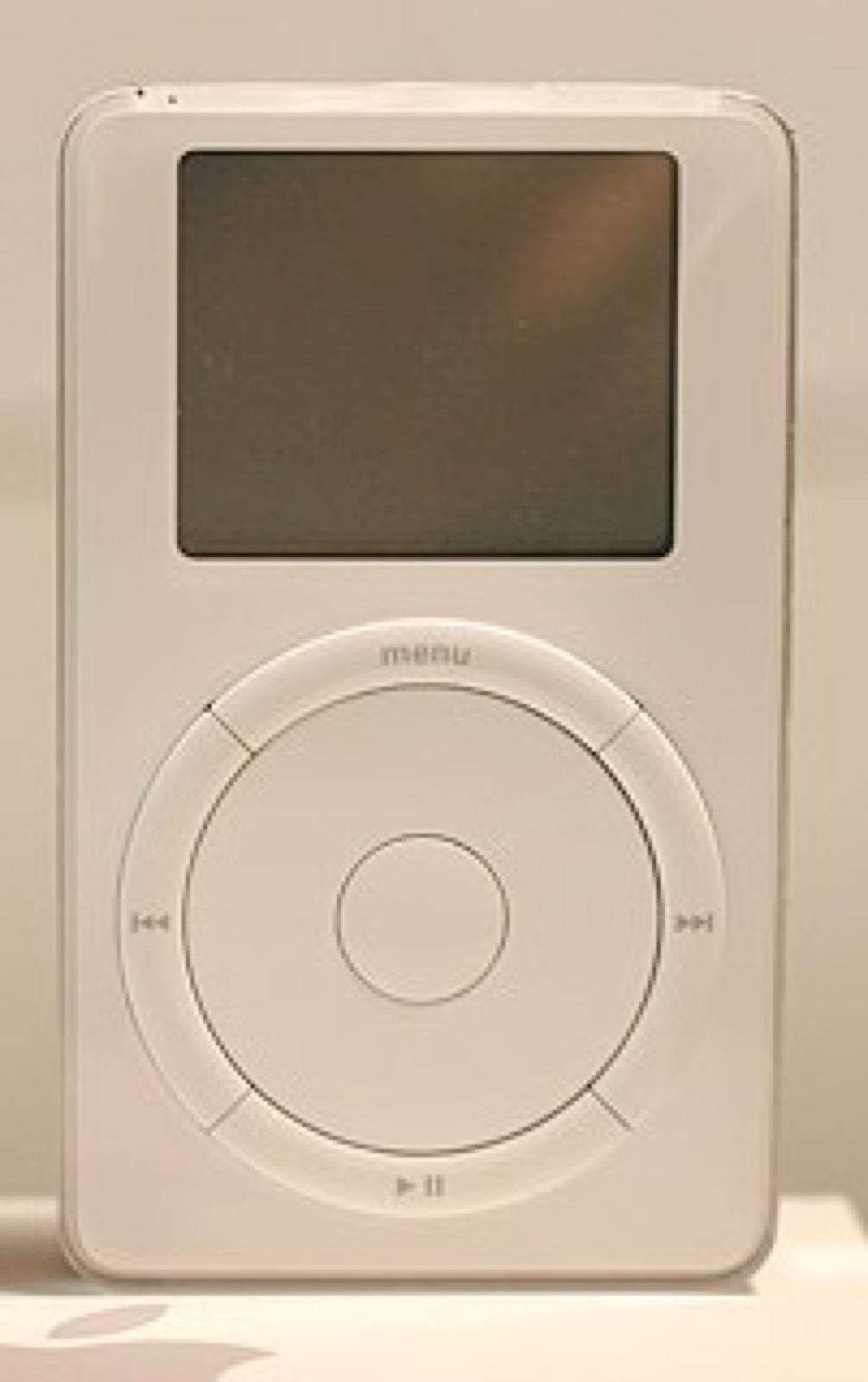
When the first iPod arrived in October 2001, the tech press shrugged. It cost $399. It only worked with Macs. Other MP3 players had been around for years.

They were all missing what Apple had figured out: the others were bad. They held an album or two and you picked songs with clumsy buttons. The iPod held a thousand songs on a tiny 5 GB hard drive, and you flicked through them with a scroll wheel that felt like nothing else on earth. The wheel physically spun on this first model. Later iPods went touch-sensitive, but the original clicks and turns like a dial.

The other trick was speed. Filling an early MP3 player over USB took an evening. The iPod used FireWire and loaded an entire music library over lunch.

It did not just win. It changed what Apple was. The company that made computers became the company that made the thing in your pocket, and the road from this white brick leads straight to the iPhone.

Working first-generation iPods are collector gold now, and the modding scene keeps them alive with flash storage and new batteries. The library has the spec sheet, the upgrade paths, and the owners.

Photo: Aaron Logan, CC BY 2.5

In the library

The console Nintendo wants you to forget

The Virtual Boy promised virtual reality in 1995. It delivered headaches, and died within a year.

11 Jul 2026 · 1 min read · Virtual Boy
The console Nintendo wants you to forget

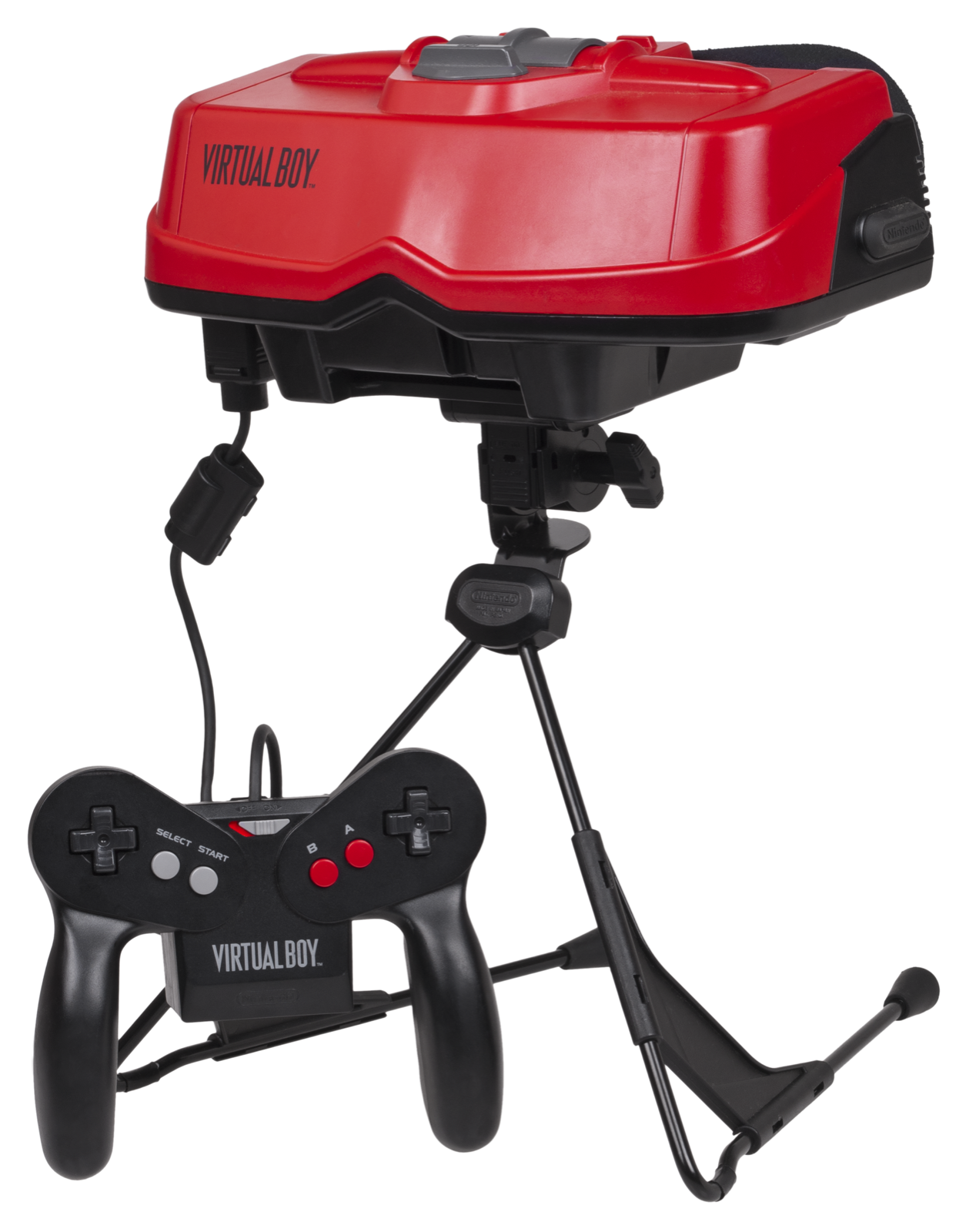
In 1995 Nintendo sold a glimpse of the future: a headset on a stand, with real 3D games inside. It was called the Virtual Boy.

There was one catch. Everything was red. Not mostly red. Only red, glowing lines on pure black, because the display tech that could do color cost too much.

You leaned your face into it at a table, like a scientist at a microscope. You could not see the room. Your neck ached. And the manual suggested taking a break every 15 to 30 minutes, because for plenty of players, the red-on-black 3D meant headaches.

The games were actually clever. Wario Land on Virtual Boy is genuinely good. But under a million units sold, and Nintendo pulled the plug in less than a year. It became the company's most famous failure.

Then the usual thing happened. The market forgot it, and the collectors did not. A working Virtual Boy with a solid display stand now sells for more than most working retro consoles, because so few were made and the displays are fragile.

The future it promised did arrive, decades later, from other companies. The Virtual Boy just knocked on the door thirty years early, wearing the wrong color.

The library has the full spec sheet and notes from the brave folks who own one. If you have one in the cupboard, add it to your gear.

In the library

The Game Boy that survived a bomb

A soldier's Game Boy got caught in a Gulf War bombing. It still plays Tetris.

10 Jul 2026 · 1 min read · Game Boy
The Game Boy that survived a bomb

In 1990, an American medic packed his Game Boy for the Gulf War. Something to do between shifts.

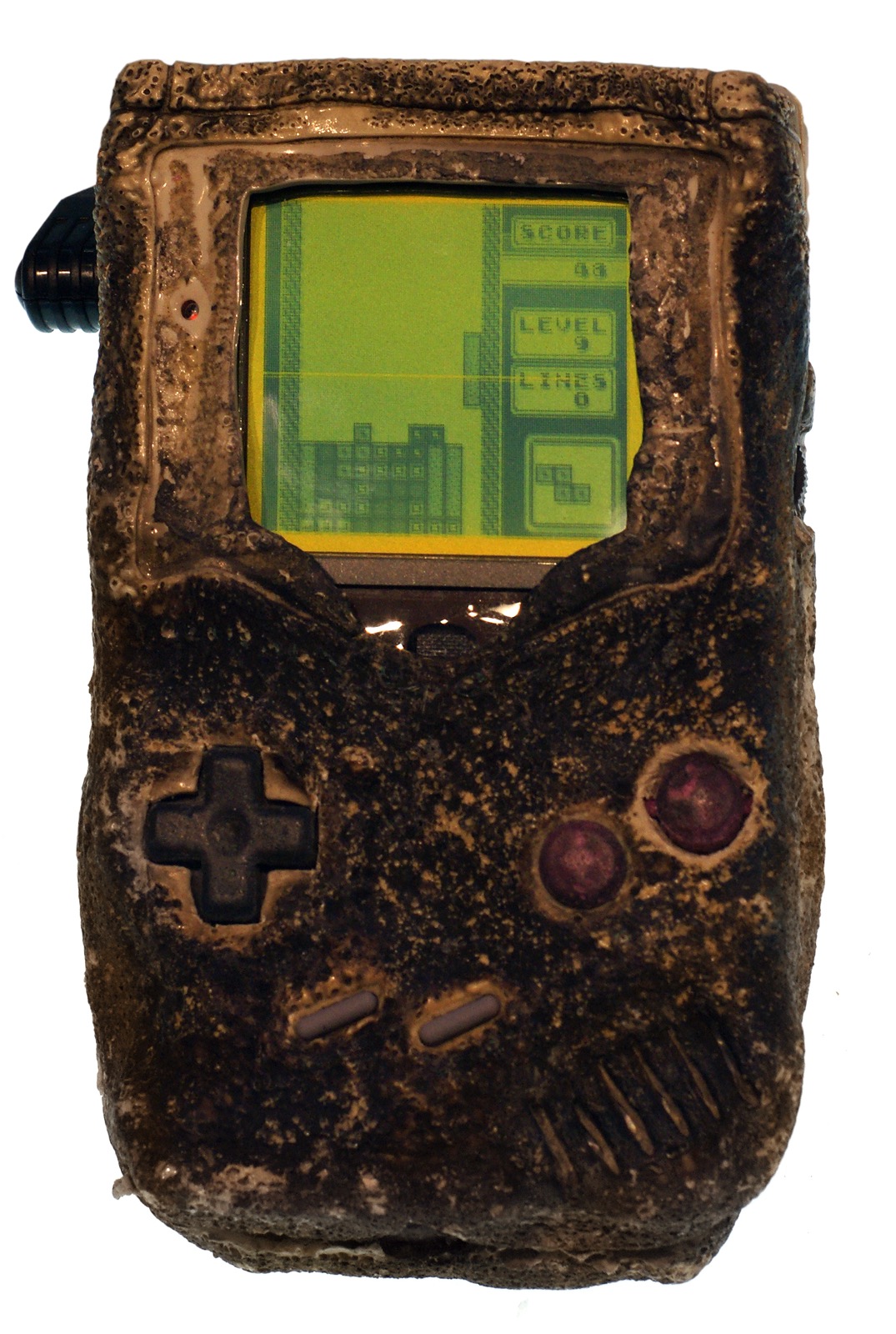
Then his barracks was hit. The building burned, and the Game Boy burned with it. The shell went black. The screen cover melted. It looked like a marshmallow left in the fire.

He sent it back to Nintendo to ask about a replacement. The repair team looked it over, put in fresh batteries, and switched it on.

It worked. Tetris started right up.

Nintendo never fixed it. They put it on display instead, and for years it sat in a case at the Nintendo store in New York, scorched, half melted, and running Tetris on a loop. Visitors lined up to see it.

Why did it survive? The Game Boy was built stubborn on purpose. Nintendo used older, proven parts instead of the newest ones. Rivals had color screens and better speakers. The Game Boy had a plain green screen, four AA batteries that lasted 30 hours, and a shell you could drop down the stairs. It outsold every rival anyway.

The burned unit became the most famous Game Boy in the world. Yours probably still works too.

The library has the full spec sheet, the mods people do today, and notes from owners. Got one in a drawer? Add it to your gear and be counted.

In the library

The SE/30 is still the best Mac Apple ever made

Thirty-seven years on, the hacker Mac refuses to retire

10 Jul 2026 · 1 min read · Macintosh SE/30
The SE/30 is still the best Mac Apple ever made

Ask anyone who mods old Macs which machine they would save from a burning building. Most give the same answer: the Macintosh SE/30.

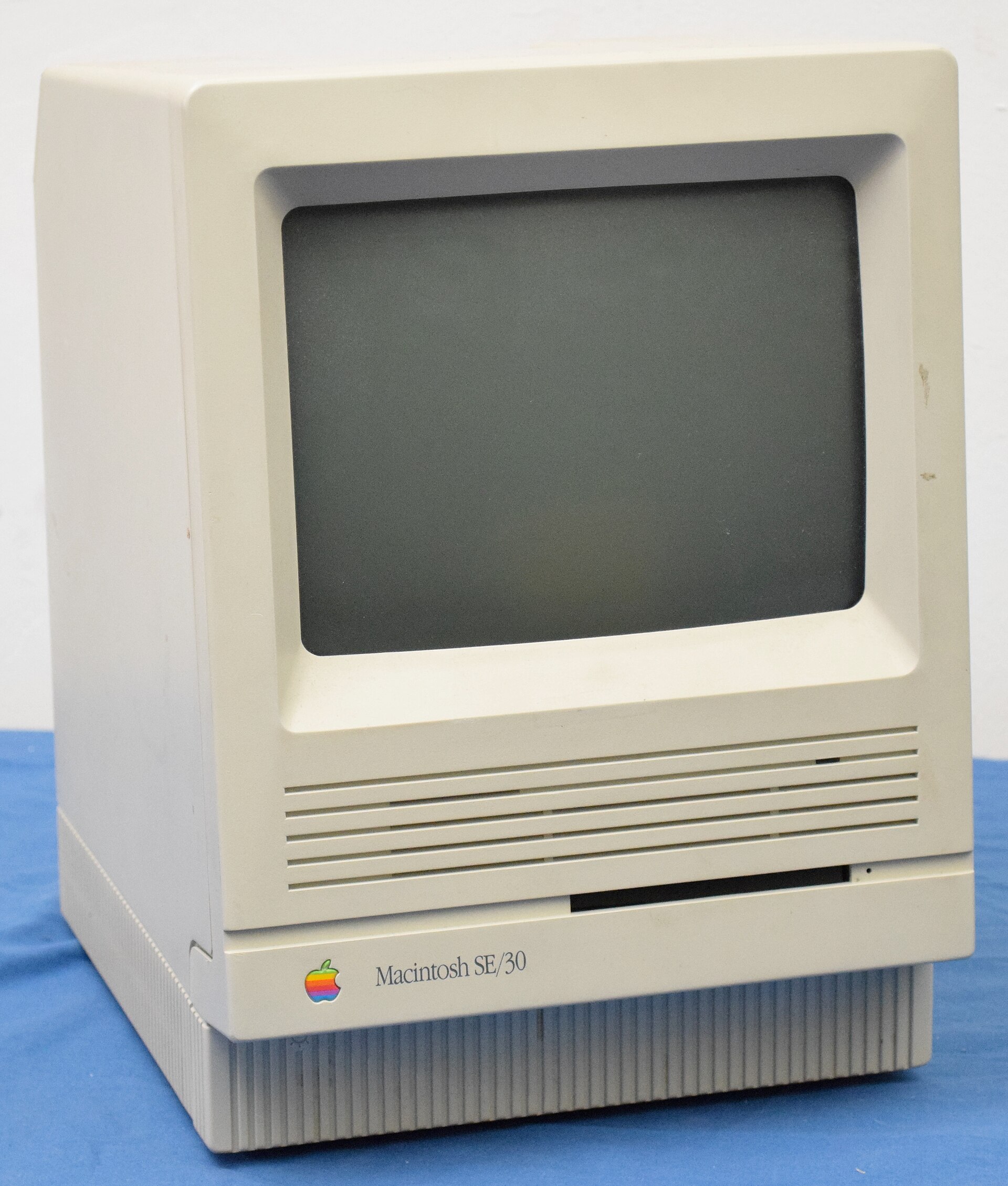
On paper it is a small beige box from 1989. It has a 9-inch black and white screen. So why does everyone want one?

Simple. It was built with room to grow. Most Macs from that time maxed out at 4 or 8 MB of memory. The SE/30 takes 128 MB. It also has an expansion slot that fits network cards, faster processors, and even cards that drive a second monitor.

That room to grow is why it is still alive in 2026. People run modern hobby software on them. People put them on wifi. People fix the old capacitors and hand the machine to their kids.

The library has the full spec sheet, the upgrade paths, and notes from people who own one. Got one in a cupboard? Add it to your gear and be counted.

Photo: Shelby Jueden, CC BY 4.0

In the library

The $7,499 Mac that flopped in style

Apple's birthday computer had a Bose sound system, leather palm rests, and almost no buyers

10 Jul 2026 · 1 min read · Twentieth Anniversary Macintosh
The $7,499 Mac that flopped in style

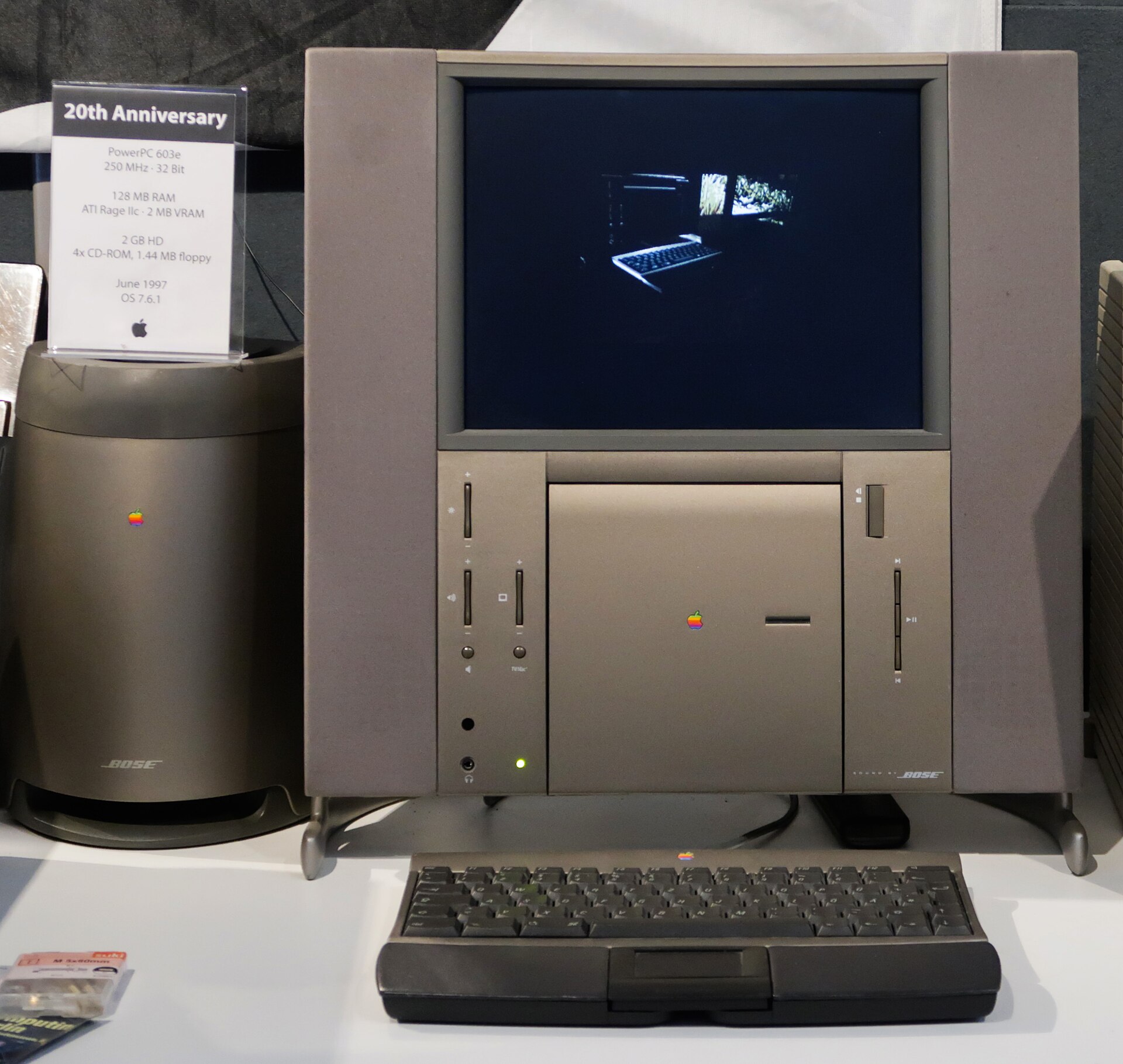
In 1997 Apple turned twenty. To celebrate, it built the strangest Mac ever sold.

The Twentieth Anniversary Macintosh stood upright like a picture frame. It had a flat screen years before flat screens were normal, leather pads to rest your palms on, and a sound system tuned by Bose. The story goes that early buyers even got it delivered and set up by someone in a suit.

The price: $7,499. That is around $15,000 in today's money, for a computer that was slower than Macs costing a third as much.

Almost nobody bought one. Within about a year, Apple slashed the price to $1,995 just to clear the shelves. The birthday computer became a fire sale.

And then something funny happened. The moment it stopped being a product, it started being a legend. Apple only made around 12,000 of them, so working units are rare. Collectors now pay more for a good one than the original sticker price.

The TAM failed at being a computer and succeeded at being a story. There are worse fates.

The full spec sheet and the collector notes are in the library. If you are one of the lucky few with one on a shelf, add it to your gear. We want to count you.

In the library

The phone you could not kill

The Nokia 3310 became the internet's favourite indestructible object. The truth is even better.

10 Jul 2026 · 1 min read · Nokia 3310
The phone you could not kill

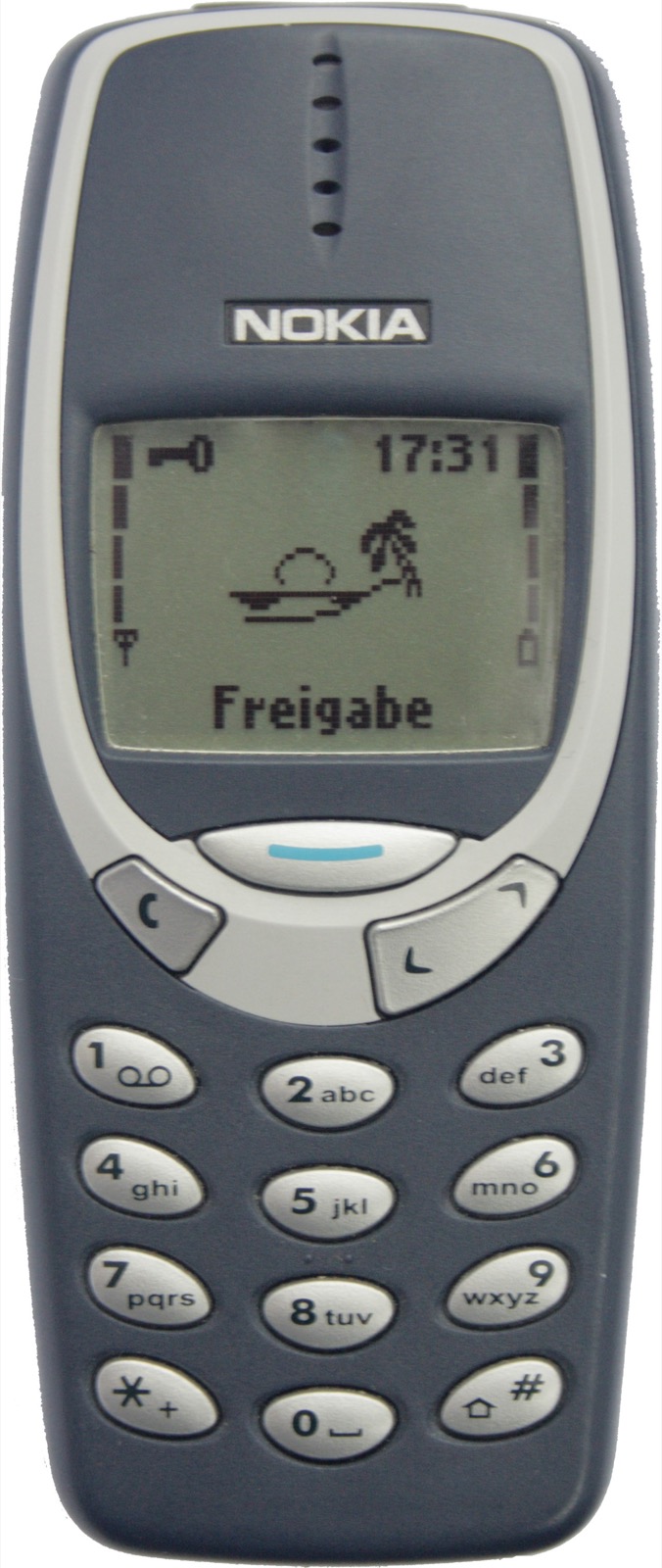
The internet decided years ago that the Nokia 3310 is indestructible. Memes show it stopping bullets, cracking floor tiles, and surviving the end of the world.

The truth: it is just a phone. But it is a phone with almost nothing that can break.

No glass front. No moving parts except the buttons. A thick plastic shell with rounded corners, so a drop spreads the shock instead of cracking a screen. When it hits the floor, the battery cover pops off, you clip it back on, and the phone keeps going. That last part is real, ask anyone who owned one.

Nokia sold about 126 million of them after it launched in 2000. The battery lasted the best part of a week. Snake II was the best game ever bundled with a phone, and plenty of people are still ready to argue that.

The 3310 comes from a time when phones were tools, not treasures. You did not baby it. You threw it in a bag, dropped it in a puddle, found it two winters later, and it asked for a charge and got on with things.

No case. No screen protector. No fear. That is the part the memes get right.

The full spec sheet and owner notes are in the library. If one is still rattling around your house, add it to your gear. It has earned the spot.

In the library

The console that would not quit

The PS2 is the best selling console ever, and people are still opening them up in 2026

10 Jul 2026 · 1 min read · PlayStation 2
The console that would not quit

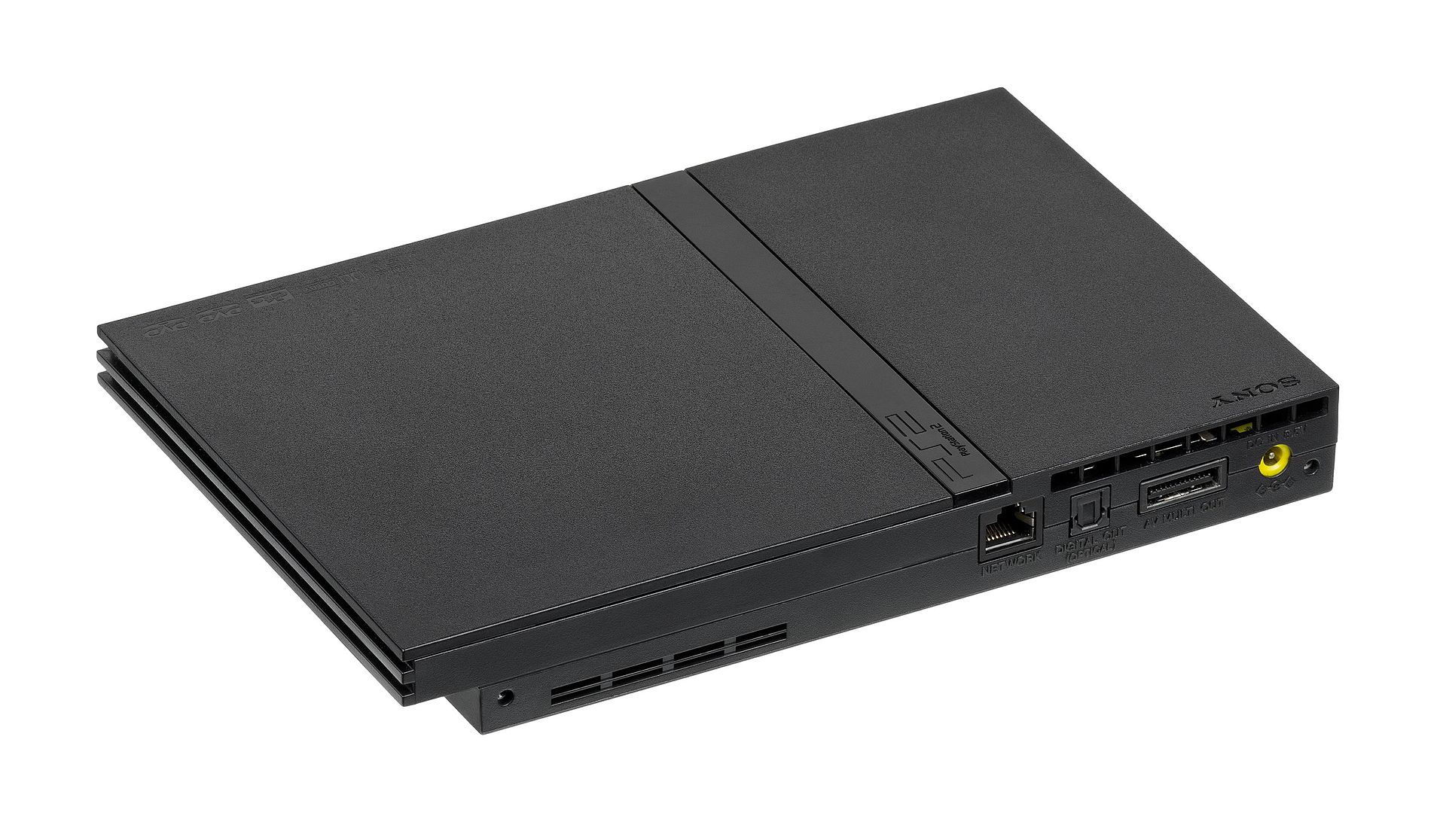
More than 155 million PlayStation 2 consoles were sold. No console before or since has beaten that. And a surprising number of them are still running.

The PS2 won for a sneaky reason: it was a DVD player. In 2000, a standalone DVD player cost about as much as the whole console. Families bought a PS2 to watch movies and got the biggest games library ever made as a bonus. Thousands of games, from racing to role playing to that one weird fishing title someone in your house loved.

Sony kept making them until 2013. Thirteen years is forever in console time.

Today the PS2 is one of the best machines to start modding. Parts are cheap because there are millions of them. The common faults are well understood. The classic one, a console that spins a disc but will not read it, is usually fixed with a screwdriver and patience rather than new parts.

That is the magic of a machine this common. Nothing about it is rare, so nothing about it is scary. Break something? Another PS2 costs less than a pizza.

The library has the full spec sheet, the upgrade paths, and notes from owners. There is a good chance one is under your TV or in a box in the garage right now. Add it to your gear and be counted.

In the library

Get legendary tech stories straight to your email, every week